Bouquet Styles Explained: Hand-Tied, Cascade, Posy & More
Whether you’re planning a wedding, buying a gift, or styling your home, bouquet structure plays a huge role in how the final arrangement looks and feels.

Choosing the perfect bouquet isn’t just about selecting beautiful flowers—it’s about choosing the right style. Whether you’re planning a wedding, buying a gift, or styling your home, bouquet structure plays a huge role in how the final arrangement looks and feels. Some bouquets are airy and organic, others are sleek and modern, while some are crafted for maximum drama. Understanding these differences helps you choose (or request) a bouquet that matches your vision, personality, and the occasion.
This comprehensive guide explores the most popular bouquet styles—hand-tied, cascade, posy, round, pageant, nosegay, and more—so you’ll know exactly what to look for and how to communicate your preferences to a florist.
Why Bouquet Style Matters
Two bouquets can use the same flowers but look completely different depending on structure. The bouquet style shapes:
- The arrangement’s silhouette
- How the flowers fall, drape, or sit
- The bouquet’s size and proportion
- The overall mood—minimalist, romantic, dramatic, or sculptural
- The comfort and practicality of holding it
For weddings, photos, and decorative settings, bouquet style can define the entire aesthetic. Understanding the different types ensures you get the look you actually want.
Hand-Tied Bouquet: Natural, Airy & Effortlessly Elegant

A hand-tied bouquet is exactly what it sounds like—flowers arranged and held together by hand, then tied securely with ribbon, twine, or fabric. This style creates a loose, organic look that feels fresh, modern, and slightly whimsical.
Hand-tied bouquets often feature seasonal blooms, greenery, and asymmetric shapes. They’re a favorite among brides who love garden-style or boho aesthetics.
Best For:
Weddings, gifts, photo shoots, and natural home décor
Perfect for people who prefer an effortless, just-picked look.
Why People Love It:
It showcases the stems, feels natural, and works with almost any flower—roses, peonies, ranunculus, eucalyptus, and wildflowers.
Cascade Bouquet: Dramatic, Flowing & Statement-Making
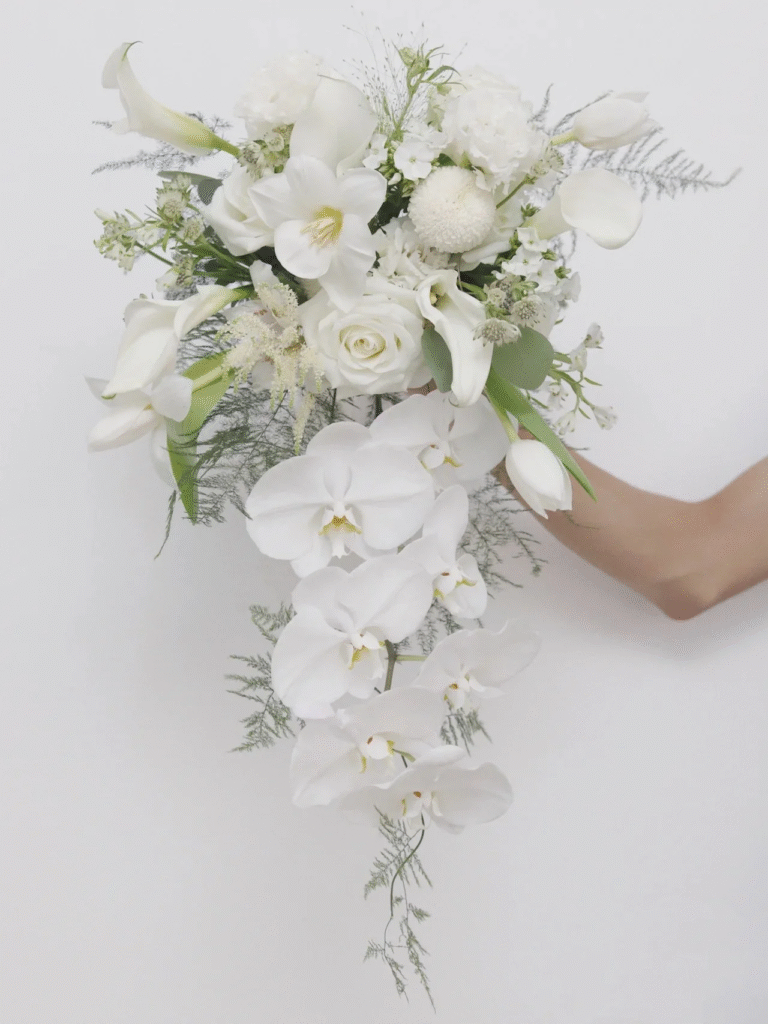
Cascade bouquets (also called “shower bouquets”) are known for their elegant, waterfall-like shape. Flowers gracefully trail downward, creating movement and drama. This is a classic bridal style often associated with luxe weddings.
Traditional cascade bouquets feature orchids, trailing ivy, stephanotis, roses, or jasmine vines. Modern versions are lighter and more airy, with less densely packed foliage.
Best For:
Formal weddings, glamorous photos, and brides who want a strong focal point
Why People Love It:
A cascade bouquet adds height, elongates the silhouette, and photographs beautifully with flowing gowns.
Posy Bouquet: Petite, Polished & Perfectly Sweet

A posy bouquet is small, round, and easy to carry—perfect for bridesmaids, flower girls, or minimalist brides. It focuses on the blooms rather than greenery, usually featuring uniform flower types such as roses, tulips, or peonies.
Posy bouquets are tightly arranged and typically wrapped with ribbon. Their refined symmetry gives them a timeless feel.
Best For:
Bridesmaids, gifting, graduations, corporate events, and elegant interiors
Why People Love It:
It is lightweight, classic, and suits anyone who wants clean, structured beauty.
Nosegay Bouquet: Compact, Traditional & Fragrance-Forward

The nosegay is similar to the posy but more compact and traditionally scented. Historically, nosegays were carried to mask unpleasant odors in medieval times—hence the name “nose-gay.” Today, they’re charming, rounded bouquets focused on scent and symmetry.
They often contain fragrant blooms like roses, lavender, freesia, and herbs such as rosemary or mint.
Best For:
Bridesmaids, traditional weddings, formal ceremonies, and fragrance lovers
Why People Love It:
It adds scent and symbolism to a bouquet while remaining small and elegant.
Round Bouquet: Symmetrical, Refined & Perfectly Uniform

The round bouquet is one of the most popular contemporary wedding styles. It’s closely packed with flowers arranged in a perfect spherical or dome shape. Florists often use roses, peonies, ranunculus, or hydrangeas to maintain that smooth silhouette.
This style is polished and timeless, ideal for brides who appreciate structure and simplicity.
Best For:
Classic weddings, formal events, and luxury aesthetics
Why People Love It:
It feels luxurious, symmetrical, and camera-ready from every angle.
Pageant Bouquet (Arm Sheaf): Elegant, Elongated & Fashion-Forward

Also known as the “arm bouquet,” this style is long and slender, designed to rest gracefully along the forearm. You often see it in runway shows, pageants, or editorial photo shoots.
Flowers like calla lilies, long-stemmed roses, orchids, or delphiniums work beautifully because of their elegant lines.
Best For:
Modern brides, fashion-forward shoots, and statement entrances
Why People Love It:
It creates a high-fashion moment and complements sleek, contemporary outfits.
Biedermeier Bouquet: Concentric, Structured & Visually Striking

Inspired by 19th-century European design, the Biedermeier bouquet features concentric circles of flowers—each ring is a different flower or color. It’s bold, architectural, and highly decorative.
This bouquet style often uses roses, carnations, chrysanthemums, and vibrant color contrasts.
Best For:
Artistic weddings, themed events, and couples who love unconventional floral design
Why People Love It:
It’s unique, graphic, and instantly eye-catching.
Composite Bouquet: Delicate, Glamorous & Technically Impressive

Also known as a “glamelia,” the composite bouquet is crafted by fusing individual petals into the shape of one giant flower. This technique requires advanced floral craftsmanship and produces a stunning, ethereal result.
Floral artists typically use rose, orchid, or lily petals to build the illusion.
Best For:
Luxury weddings, editorial photography, and brides seeking an ultra-distinctive bouquet
Why People Love It:
It’s rare, glamorous, and unlike any standard bouquet style.
Wildflower Bouquet: Free-Form, Airy & Effortlessly Romantic

A wildflower bouquet embraces irregularity. It features a mix of delicate, seasonal stems arranged in a loose, meadow-like style. Rather than symmetry, these bouquets rely on charm, movement, and natural textures.
Common flowers include daisies, asters, queen anne’s lace, lavender, feverfew, and meadow grasses.
Best For:
Boho weddings, rustic décor, outdoor celebrations, and nature-inspired homes
Why People Love It:
It feels authentic and joyful—like walking through a blooming field.
Modern Minimalist Bouquet: Clean, Chic & Architectural

Minimalist bouquets use fewer flowers and emphasize negative space, clean lines, and bold silhouettes. A single stem of a dramatic bloom—like a King Protea or anthurium—can be enough to make a powerful statement.
These bouquets often focus on shape rather than abundance.
Best For:
Contemporary weddings, art-driven spaces, and minimalist interiors
Why People Love It:
It’s sophisticated, editorial, and visually crisp.
Hoop & Crescent Bouquets: Trendy, Playful & Instagram-Famous

Hoop bouquets feature flowers arranged around a circular frame, while crescent bouquets shape blooms into a gentle moon-like arc. These modern formats are rising in popularity due to their unique silhouettes and photo-friendly designs.
They’re lightweight, stylish, and ideal for brides seeking something fresh.
Best For:
Modern weddings, boho celebrations, bridesmaids, and outdoor shoots
Why People Love Them:
They look artistic and add a touch of whimsy to photos.
How to Choose the Right Bouquet Style
Picking your ideal bouquet style depends on several factors, including:
Your outfit
A sleek, fitted gown pairs wonderfully with a cascade or pageant bouquet. A ball gown suits round or hand-tied styles.
Your setting
Garden weddings pair well with organic, loose bouquets. Indoor formal venues suit structured designs.
Your flowers
Some blooms naturally lend themselves to certain shapes—like calla lilies for arm sheaf bouquets or peonies for round bouquets.
Your personality and vibe
Romantic? Try a hand-tied or posy. Dramatic? Choose a cascade. Modern? Go for minimalist or crescent styles.
Florists can help refine these choices by suggesting what works best with your selected flowers and overall aesthetic.
Final Thoughts: Let Your Bouquet Tell Your Story
Bouquet styles are more than decorative—they reflect mood, personality, and intention. Whether you prefer the relaxed beauty of a hand-tied arrangement, the bold drama of a cascade bouquet, or the clean elegance of a minimalist arm sheaf, the right bouquet can elevate any moment.
Understanding these styles empowers you to communicate clearly with florists and choose arrangements that truly fit the occasion. From intimate weddings to stylish home décor, your bouquet becomes a meaningful part of the experience.

The Flower Diary
The Flower Diary editorial team writes practical guides to flowers, care, symbolism and arranging.