Flower Library · 75% profile
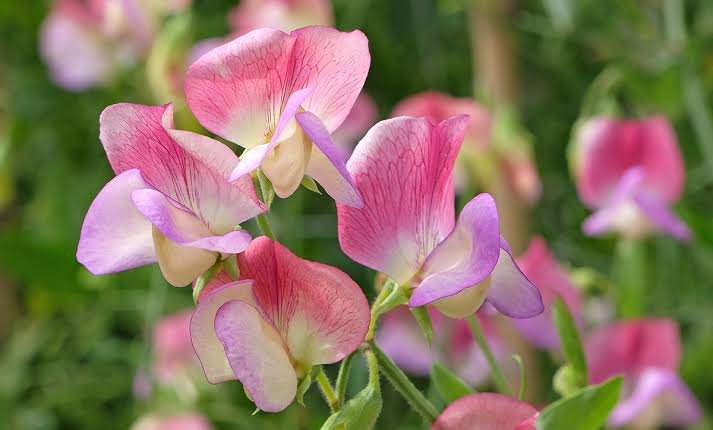
Sweet Pea
Lathyrus odoratus
Fabaceae · annual, vine
A fragrant cool-season climber with delicate ruffled petals.
Fact-checked September 23, 2026
SeasonSpring
ColoursPink, purple, white, red, blue
LightFull sun to part shade
WaterNeed consistently moist, well-draining soil and typically require deep watering 2 to 3 times a week, or daily watering if grown in containers or during hot, dry weather
Care levelModerate
Vase life3–5 days
FragranceLight
Best forFragrant posies, romantic spring bouquets
A fragrant cool-season climber with delicate ruffled petals.
About this flower
This Flower Diary entry is designed as a practical starting point. Flowering time, colour, vase life and growing behaviour can vary by cultivar, climate and handling.
Using it in arrangements
Consider the flower’s scale, form, season and colour alongside the rest of your arrangement. Local availability may differ from natural bloom season because commercial flowers can be greenhouse-grown or imported.
Botanical identity
- Family
- Fabaceae
- Genus
- Lathyrus
- Native range / origin
- Mediterranean region
- Distribution & cultivation
- Sweet pea is native to the Mediterranean region, specifically Sicily, southern Italy, and Cyprus. It was widely distributed globally following its introduction to England in the 17th century, eventually becoming a staple of Victorian gardens and a commercial favorite for cut flowers worldwide.
Flower characteristics
- Bloom size
- 1.5 to 2 inches (2 to 5cm across)
- Fragrance
- Light
- Fragrance notes
- Light, floral-sweet, and honey-green
Growing & garden care
- Light
- Full sun to part shade
- Water
- need consistently moist, well-draining soil and typically require deep watering 2 to 3 times a week, or daily watering if grown in containers or during hot, dry weather
- Soil
- rich, deeply worked, and well-draining loamy soil that stays moist but never waterlogged
- Soil pH
- neutral to slightly alkaline soil with a pH between 6.0 and 7.5 (ideally around 6.5 to 7.5)
- Containers
- Yes
- Indoors
- Sometimes
Floristry & cut-flower notes
- Vase life
- 3–5 days
- Best uses
- fragrant posies, romantic spring bouquets
Meaning, gifting & culture
- Common meanings
- gratitude, pleasure, goodbye
- Gifting occasions
- thank you, friendship, spring gifting
Safety & handling
- Pet safety
- Toxic
- Toxicity notes
- Sweet pea flowers (Lathyrus species) are toxic to dogs and cats because they contain a dangerous chemical called aminopropionitrile.
- Edibility
- Do not eat
- Handling notes
- Ornamental sweet peas (Lathyrus odoratus) are entirely inedible and carry significant toxic properties. Do not confuse them with edible garden peas (Pisum sativum).